


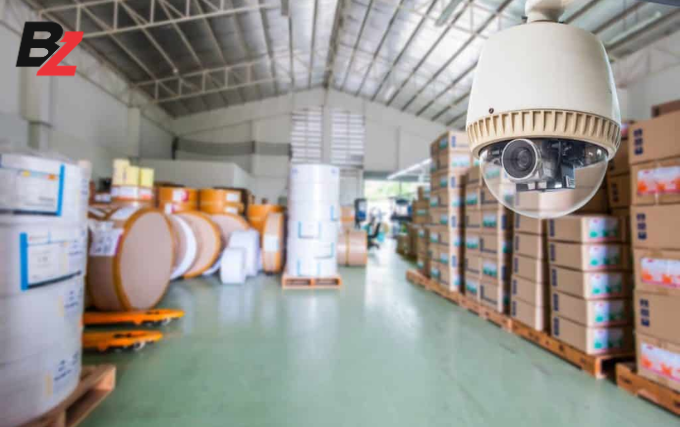
Most warehouses still rely on cameras that only record incidents after they happen. By the time someone reviews the footage, the inventory is gone, the damage is done, or operations have already been disrupted.
The problem is simple: traditional warehouse security systems are reactive.
The future is different. AI-powered warehouse security systems are shifting security from passive monitoring to real-time detection, automated response, and operational intelligence. And in 2026, that shift is no longer optional.
According to the National Retail Federation, inventory shrink in the U.S. reached $112.1 billion in 2022, up from $93.9 billion the year before. A significant portion of that loss originates in distribution centers and warehouses. At the same time, workplace injuries in warehousing remain high, with the U.S. Bureau of Labor Statistics reporting an injury rate of 4.5 cases per 100 full-time workers, higher than many other industries.
Warehouses are expanding, becoming more automated, and operating 24/7. But their security infrastructure often hasn’t evolved at the same pace.
So how exactly is AI changing the equation?
Why Traditional Warehouse Security Systems Are Falling Behind
Traditional warehouse security systems were designed for a different era.
They typically include:
- Fixed CCTV cameras
- On-prem NVRs
- Manual monitoring
- Basic motion detection
- Standalone access control
These systems record everything but understand nothing. Security teams must manually scrub hours of footage to find relevant incidents. False alarms are common. Alerts are often delayed.
In large distribution centers spanning hundreds of thousands of square feet, that delay can be costly.
A 2023 logistics industry report estimated that a single hour of warehouse downtime can cost between $10,000 and $50,000, depending on volume and sector. When security incidents disrupt shipping or receiving operations, losses multiply quickly.
AI addresses these gaps by adding context and automation to surveillance.
What AI Actually Means in Warehouse Security
AI in warehouse security systems is not just about “smart cameras.” It refers to computer vision models that analyze video feeds in real time and generate meaningful insights.
Modern AI-powered warehouse security systems can:
- Detect unauthorized access instantly
- Identify unusual movement patterns
- Recognize vehicles entering restricted zones
- Flag loitering in loading docks
- Trigger alerts when doors are propped open
- Cross-reference video with access logs
Instead of recording everything and reviewing later, AI prioritizes what matters.
This fundamentally changes how security teams operate.
1. Real-Time Threat Detection Reduces Inventory Loss
Warehouse theft is not always external. Internal shrink accounts for a meaningful percentage of losses across supply chains.
AI video analytics can:
- Detect after-hours movement
- Identify repeated access to sensitive zones
- Flag tailgating at secured doors
- Alert teams if high-value storage areas are accessed unexpectedly
For example, AI can detect when someone remains near a high-value inventory cage longer than normal operational thresholds and notify security immediately.
In large-scale warehouse environments, platforms such as Coram’s warehouse security system demonstrate how modern AI integrates high-definition video with intelligent alerts. These systems connect with existing IP cameras, eliminating the need for complete hardware replacement, while enabling:
- Real-time event detection
- Centralized monitoring across sites
- Automated alerting for unauthorized entry
- Integration with access control systems
- Rapid video search across hours of footage
The key shift is speed. Instead of discovering theft days later during reconciliation, security teams are notified within seconds.
2. AI Enhances Workplace Safety Compliance
Warehouses are high-risk environments.
Forklifts, heavy machinery, elevated storage racks, and high traffic zones create ongoing hazards. OSHA reports that forklifts alone account for approximately 85 fatal accidents and 34,900 serious injuries annually in the U.S.
AI-powered warehouse security systems help reduce these risks by:
- Detecting pedestrians in forklift zones
- Identifying blocked emergency exits
- Monitoring unsafe entry into restricted areas
- Flagging improper access to hazardous material storage
Instead of relying solely on supervisors, AI acts as a second layer of oversight.
In large distribution facilities operating across multiple shifts, this automated monitoring becomes especially valuable during overnight hours when staffing is leaner.
3. Smart Video Search Saves Investigation Time
One of the most overlooked costs in warehouse security is time spent reviewing footage.
Security managers frequently report spending hours locating:
- A missing pallet
- A loading dock dispute
- A damaged shipment
- A gate access anomaly
AI changes that workflow.
Modern systems allow operators to search footage using attributes like:
- “Red forklift near dock 3”
- “White truck at gate 2 after 9 PM”
- “Person entering cage area last Friday”
Instead of scrubbing through 12 hours of video, results appear in seconds.
For multi-site warehouse operators, this dramatically improves efficiency and lowers operational overhead.
4. Multi-Site Visibility Through Centralized Dashboards
E-commerce growth has accelerated warehouse expansion. According to CBRE, the U.S. added over 100 million square feet of warehouse space in 2023 alone.
Many companies now operate regional distribution centers across states or even countries.
Traditional security models struggle with:
- Inconsistent policies
- Different hardware setups
- Fragmented monitoring
AI-driven warehouse security systems provide centralized dashboards where security teams can:
- View all sites from one interface
- Receive unified alerts
- Standardize access control rules
- Monitor compliance consistently
This level of visibility is increasingly critical for enterprise logistics networks.
5. AI Reduces False Alarms and Alert Fatigue
Basic motion detection systems often trigger excessive alerts due to:
- Lighting changes
- Moving shadows
- Small animals
- Environmental factors
Alert fatigue leads to slower response times.
AI systems are trained to distinguish between:
- Human movement vs background motion
- Authorized vs unauthorized entry
- Vehicles vs debris
By filtering noise, AI ensures that alerts are actionable rather than distracting.
6. Integration With Access Control Strengthens Perimeter Security
Warehouse security systems are most effective when video is paired with access control.
When integrated properly, AI systems can:
- Link door access events to video footage
- Flag badge misuse
- Detect tailgating
- Automatically alert when restricted zones are accessed
This integration provides full context.
Instead of seeing a door open event alone, security teams see:
- Who accessed it
- Whether anyone followed
- What happened next
This level of visibility is increasingly expected in modern warehouse security architecture.
7. Environmental Monitoring and Operational Intelligence
Warehouses also face environmental risks.
AI-driven security systems can integrate with:
- Temperature sensors
- Door status sensors
- Motion sensors
- Perimeter alarms
For cold storage warehouses, temperature anomalies can cause product loss worth thousands of dollars per pallet.
Integrated monitoring helps detect these issues early.
The Financial Case for AI in Warehouse Security
Upgrading security infrastructure requires investment. But data suggests AI-based systems often provide measurable ROI.
Benefits include:
- Reduced inventory shrink
- Faster incident resolution
- Lower guard staffing needs
- Fewer workplace injury claims
- Reduced downtime
When shrink reduction alone can save tens or hundreds of thousands annually, AI security investments become easier to justify.
The Future of Warehouse Security Systems
Looking ahead, AI will likely expand into:
- Predictive threat modeling
- Autonomous drone patrol integration
- Advanced license plate recognition
- Behavioral anomaly detection
- Real-time compliance scoring
As warehouses adopt robotics and automation, security systems must evolve to match complexity.
AI is not replacing security teams. It is augmenting them.
Key Takeaways
- Warehouse shrink and downtime costs are rising globally
- Traditional warehouse security systems are reactive and slow
- AI enables real-time detection and faster response
- Integration with access control strengthens perimeter security
- Centralized dashboards improve multi-site visibility
- AI reduces false alarms and improves operational efficiency
- Investment in AI security often delivers measurable ROI
Conclusion: The Shift From Recording to Intelligence
The future of warehouse security systems is not about more cameras. It is about smarter systems.
AI is reshaping how warehouses protect inventory, ensure worker safety, and maintain operational continuity. In a logistics environment where margins are tight and disruptions are costly, intelligent surveillance is becoming a strategic asset rather than a facility expense.
As warehouses grow more automated and interconnected, security must keep pace.
The real question is no longer whether AI will shape warehouse security. It already is.
What security gaps still exist in your warehouse operations today?
